When pursuing ambitious, long-term goals, it can be difficult to concentrate on the shorter, sometimes repetitive tasks that are crucial for that vision.
To stay focused, I use sprints.
Sprints are fixed lengths of time, typically ranging from one to four weeks, during which a team works to complete a predetermined set of tasks or user stories. This approach allows for incremental progress, making large projects more manageable. Sprints are considered the heartbeat of Scrum, a project management framework designed to enhance team collaboration and achieve goals.
While Scrum is predominantly used in software development, its principles of productivity and time management are highly applicable in various contexts. I first implemented Scrum during a research project, and I now apply its principles in my personal life to enhance my productivity.
It looks something that this:
Each sprint lasts one week.
At the beginning of each sprint (Sunday), I establish one primary goal for each of my four “personal projects.” Four projects, four goals. I then compile a list of mini-tasks for each goal.
Throughout the week, from Monday to the following Sunday, I refrain from adding or removing any tasks (unless I identify something that won’t contribute to my progress.) This strategy prevents distractions and ensures that I stay focused on my original objectives.
I use Notion for my sprint board. Each day is divided into three categories: “Not Started,” “In Progress,” and “Completed.” All tasks begin in “Not Started,” and by the end of the day, they should be in “Completed.”
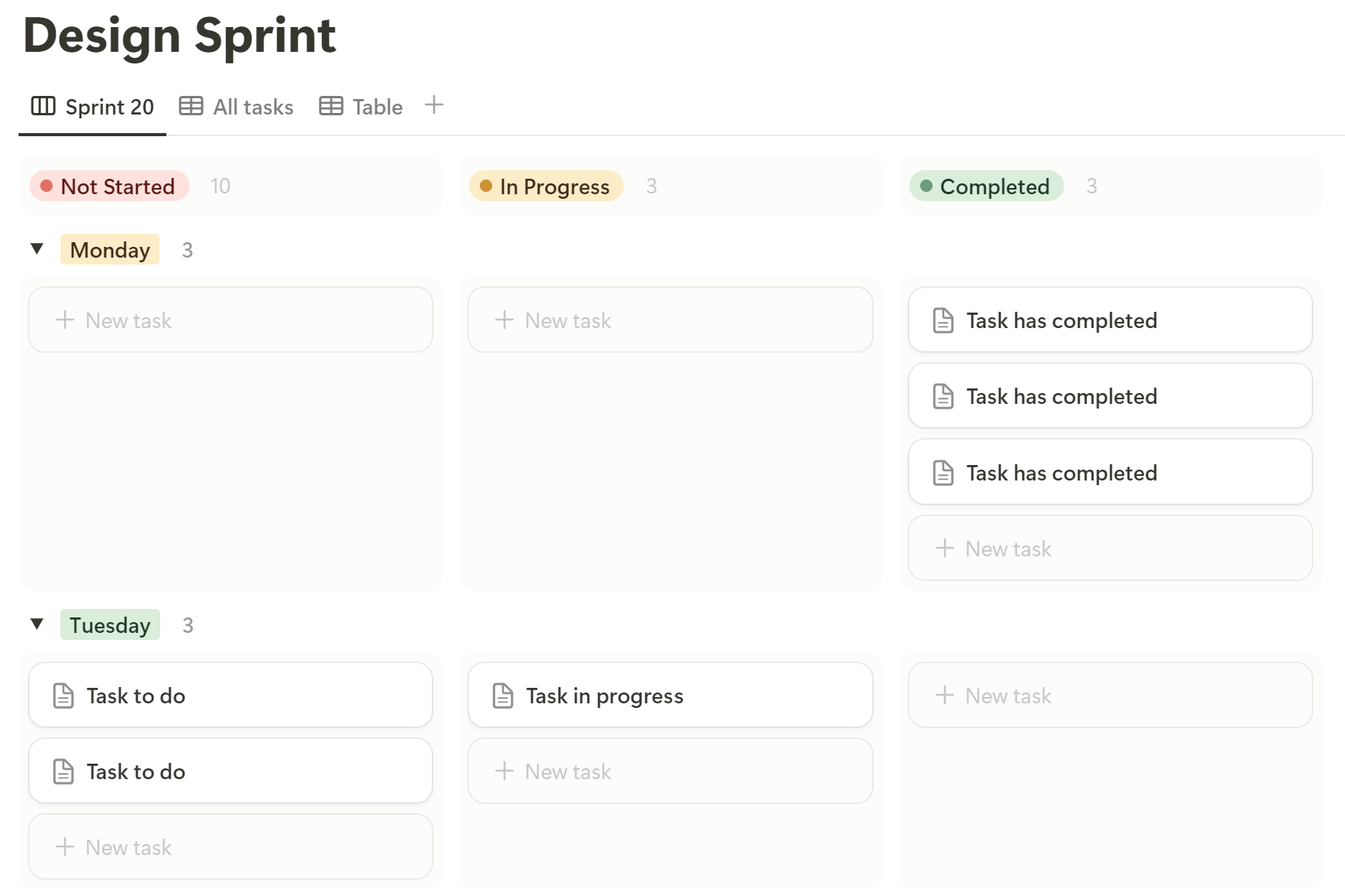
At the end of a sprint, Scrum teams conduct a sprint review which assess their progress and a retrospective that focuses on improving team dynamics by addressing challenges encountered and how they were resolved. I have adapted these processes for my own self-designed retrospective, where I reflect on my weekly accomplishments and areas for improvement.
For me, it’s important to feel comfortable with my definition of “done,” even if I did not accomplish all my tasks.
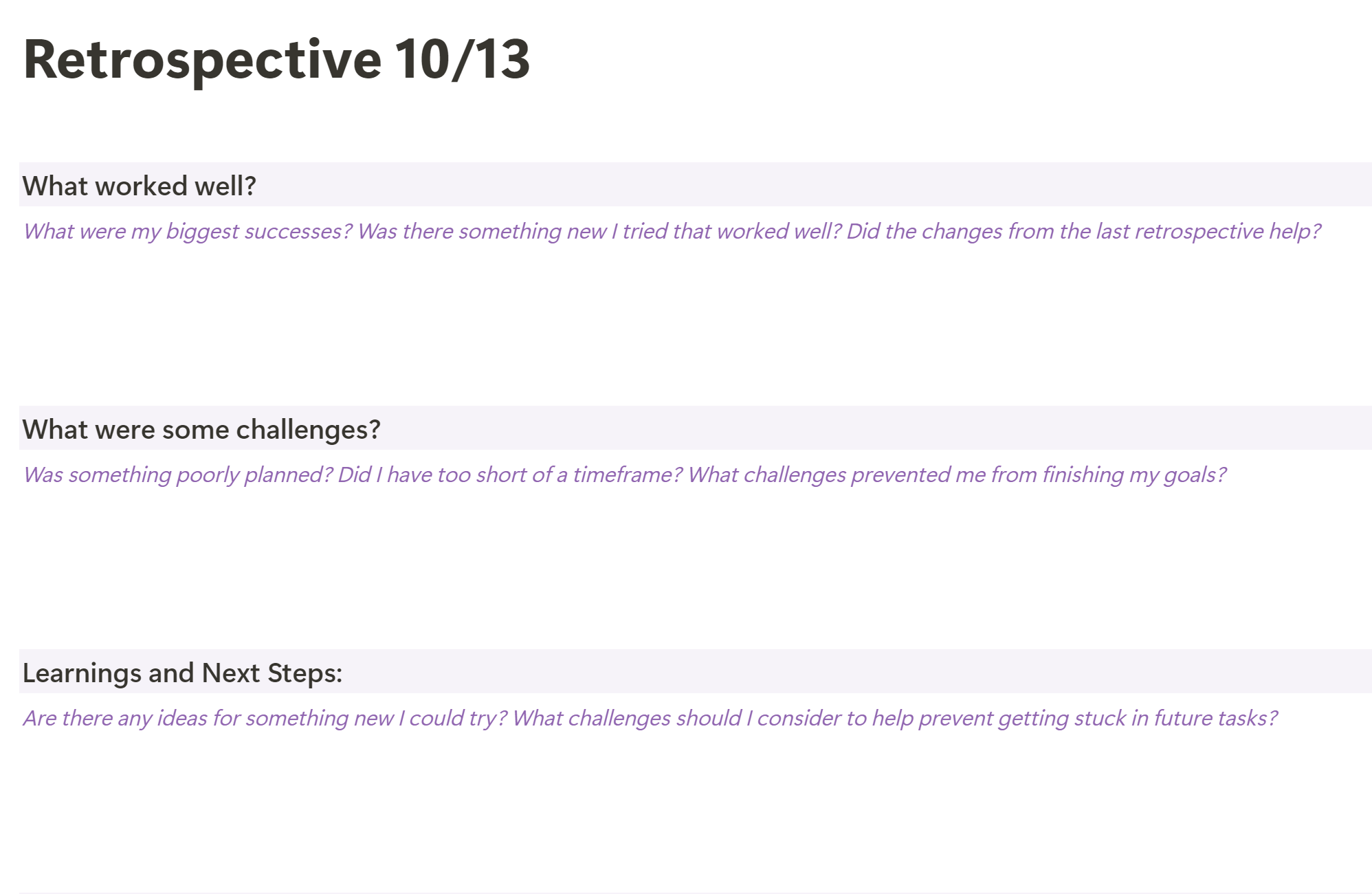
Here’s an example of what my retrospective looks like, allowing ample space for reflection.
Tasks that are not completed are reassessed and reprioritized against everything else in the product backlog, a list of all the tasks I need to accomplish to reach my goals.
Over time, as I continue to refine my approach to using sprints, I can rely on them to provide a structured pathway to success.