Learnings from Organizing a Tech Policy Symposium
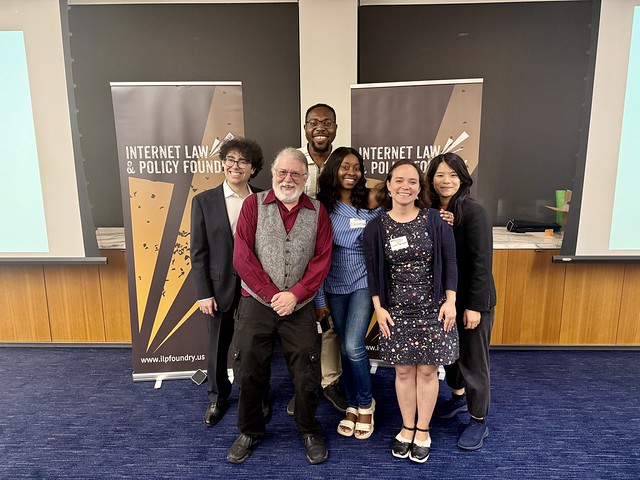
Earlier this year, I helped organize the Internet Law & Policy Foundry’s inaugural Tech Policy Digital Symposium, an initiative designed to provide early- and mid-career professionals with a platform to contribute original perspectives to contemporary debates in internet law and policy.
The initiative was piloted by my fellow Foundry Fellows, Beth Do and Sara Raza, and I was excited to help make their idea a success. Following our call for submissions, we received dozens of articles and ultimately selected 16 for publication, covering topics from AI governance to broadband affordability and digital rights.
While I’ve organized events and programs before, coordinating an editorial initiative was a new experience. I enjoyed it so much that when I became co-lead of the Foundry’s Editorial Committee, it inspired me to launch The Future We’re Writing, a new editorial series on how today’s technology policy choices will shape what comes next. For anyone interested in organizing a similar publication or symposium, here are a few tips and tricks from the experience.
What makes an article worth publishing?
Contributors spend considerable time researching and developing their articles, so how do you decide which pieces to publish? One consideration is the volume of submissions. With a smaller pool, you might consider accepting a greater proportion of articles, provided they meet your editorial standards, or adjusting the number of proposals you were initially targeting (if you said you would accept 10, you may now accept 5). With a larger pool, you can afford to be more selective. It’s also important to establish a clear theme for the symposium so all the submissions are aligned rather than simply covering loosely related topics.
For us, developing a rubric with criteria such as originality, clarity, and diversity of perspectives helped establish a consistent review process. Still, applying those criteria wasn’t always straightforward. Some articles presented compelling ideas but needed stronger arguments, while others were well-written but didn’t necessarily offer an original perspective. We also had to distinguish between pieces that advanced a concise, persuasive argument and those that read more like academic papers.
Tip: Consider introducing a conditional acceptance category for submissions with strong potential that aren’t quite publication-ready. We allowed these authors to revise their articles based on editorial feedback before making a final decision. This allowed us to support promising writers while maintaining a consistent standard.
Planning beyond the editorial review
Selecting articles was only one part of the process. We wanted the symposium to be more than just an opportunity for authors to publish their work with the Foundry. We also wanted to invest in their development as writers by offering editorial feedback and a dedicated writing workshop to help participants strengthen their arguments and communicate their ideas more effectively.
This meant planning the entire publication process, from initial acceptance to publication. It also meant considering what would make the opportunity valuable to prospective contributors beyond publication itself, and identifying additional benefits we could realistically offer. This helps increase the number of articles you will receive.
Tip: Build your publication timeline backward from the intended release date, leaving more time than you think you’ll need for author revisions and final formatting. I’d also recommend establishing a quality-control process, with a second reviewer checking each article before publication. Even after multiple rounds of editing, it’s surprisingly easy to overlook a broken hyperlink.
Knowing when to make a decision
One of the more difficult parts of the symposium was deciding when to stop requesting revisions. Some articles improved considerably after the first round of feedback, while others still needed substantial work. We wanted to give authors a fair opportunity to strengthen their pieces, but we also had to recognize when additional revisions were unlikely to bring an article up to our standards. The same challenge came up when organizing our writing workshop. We spent weeks trying to confirm a prospective speaker before reaching out to someone else, whom we were able to secure within days.
Tip: Establish clear limits on revision rounds and deadlines for final editorial decisions. For us, this meant deciding whether to accept or decline a piece after authors had an opportunity to address our feedback. The same tip applies to event planning: reach out to a speaker at least a month ahead and always have alternatives ready if those plans fall through.
Delegating across the team
The symposium was organized by volunteers balancing their responsibilities with full-time jobs and other commitments. Clear responsibilities and regular communication were essential to keeping things on track, especially when coordinating between the editorial team, which was running the symposium, and the communications team, which worked on the website backend for publishing.
A few tips: Give your symposium crew the autonomy to make decisions within their areas of responsibility rather than requiring approval for every small detail. This reduces unnecessary back-and-forth and allows people to take greater ownership of their work.
Also, tasks without deadlines will fall through the cracks. Make it a habit to end every meeting with clear next steps and deadlines, even if they’re tentative. This is especially important for volunteer-led initiatives, where competing commitments can easily push tasks to the back burner.
The best part was getting to read so many different perspectives on tech policy and helping authors bring their ideas to a wider audience. It’s easy to overlook how much work goes into publishing an article when you’re accustomed to only seeing the published version, but experiencing the process gave me a greater appreciation for the efforts that go into such work. Excited to build on what we’ve learned through The Future We’re Writing.