Designing Civic Solutions: A Design Thinking Workshop
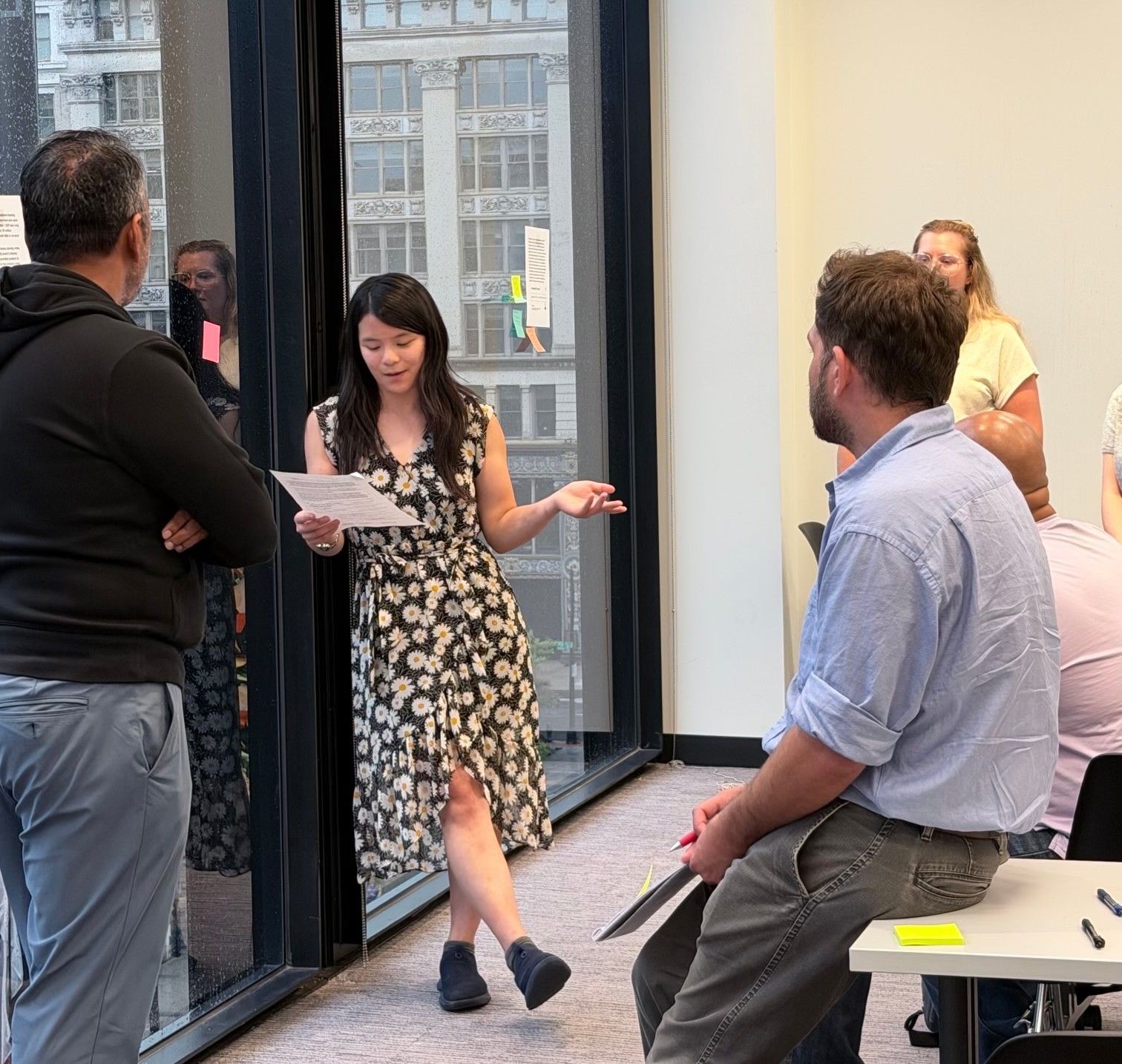
I honestly cannot say enough about how giddy I was after this workshop. SO thoughtful! Helen Y. Glover designed an experience that instantly connected how you can plug in to civics issues that affect us all in a way that truly brings into focus the humans affected.
As part of the Upskilling Labs Civics and Election Build Cycle, I facilitated a workshop introducing participants to human-centered design and how it can be applied to civic challenges. I’m sharing a few lessons and resources from the experience.
There’s a lot to cover in the field of design thinking, far more than could fit into a single workshop! My goal was to focus on the fundamentals and spark enough curiosity for participants to explore the field further.
I structured the workshop around the Five Stages of Design Thinking: Empathize, Define, Ideate, Prototype, and Test. Of course, real-world problem-solving is rarely this linear, but the framework offers a useful starting point for understanding how ideas develop into solutions!
1. Start with the people in the room
The first few minutes can make or break a workshop. Rather than jumping straight into the presentation (cough, lecture, cough), I encouraged participants to go around the room and introduce themselves.
This helped create a more collaborative experience where participants felt their perspectives were heard. Talking with people instead of at them helped them feel confident asking questions.
Introductions can run long, so give people a clear time limit: “30 seconds per person” or “In one or two sentences, tell us about yourself.”
2. Explain why it matters
Before diving into the five stages, why should people care? I started by asking:
How do we make sure we’re solving the right problems before we start building solutions?
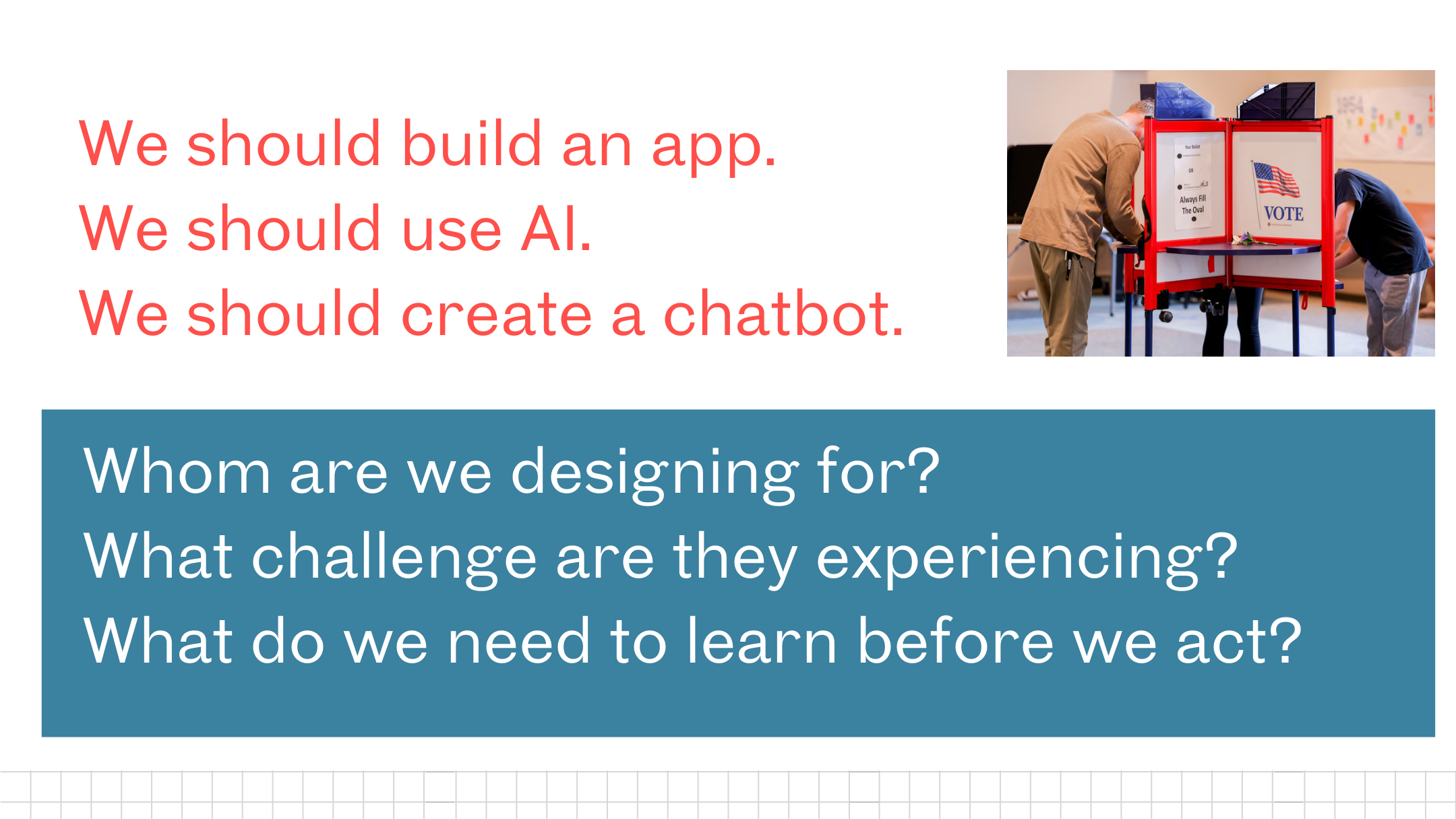
In civic tech, it’s easy to jump straight into developing a tool or application. After all, technology is in the name! But before thinking about solutions, we should ask more open-ended questions: Who are we building for? What do they actually need? And are we addressing the right problem?
That’s where I was able to bring in why we should care about design thinking. It encourages us to understand people’s needs before deciding what to build.
3. Keep the presentation simple
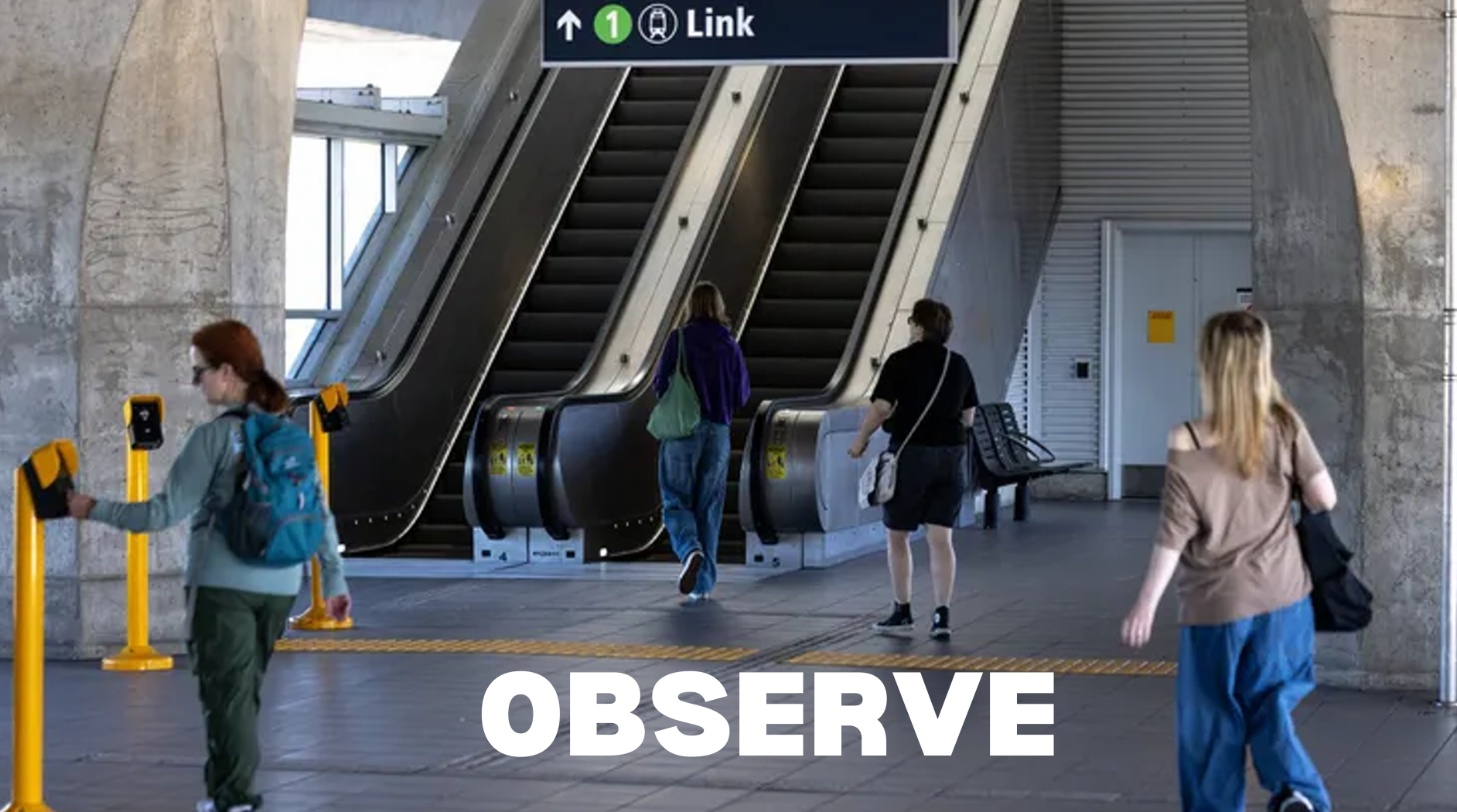
I kept the slides light on text, using everyday language and examples rather than technical jargon. Some slides contained just a word. You want the audience focused on what you’re saying rather than trying to read a textbook-style presentation.
I wanted the presentation to serve as a starting point, not a comprehensive lecture on design thinking.
Here are a few of the slides I used. As you can see, they are very minimalist!

4. Get people moving and making things
The presentation was only one part of the session. A workshop should be more than a presentation!
To put the concepts into practice, we did a “How Might We” exercise using four real local civic challenges posted around the room.
Participants split into groups and spent about 5–7 minutes at each challenge, developing “How Might We” questions and writing them on sticky notes. The catch? They couldn’t repeat a question that had already been shared. This encouraged participants to consider different stakeholders and explore the many ways a single challenge could be approached.
Once every group had rotated through all four challenges, we came back together to read out the questions.
Key Takeaways
- Participation needs to be designed. Small choices to get people engaged—from introductions to a “How Might We” exercise—make the event collaborative and more fun.
- Constraints can encourage creativity. Asking participants not to repeat existing “How Might We” questions pushed them to consider different ways of approaching the same challenge.
- Good facilitation isn’t about having all the answers. Sometimes the most useful thing you can do is create the environment for others to ask questions and learn from one another.
One thing I’d like to explore in future workshops is how to move from generating questions to testing them with the people directly affected. After all, a good idea is only a starting point.