Making Community Knowledge Last
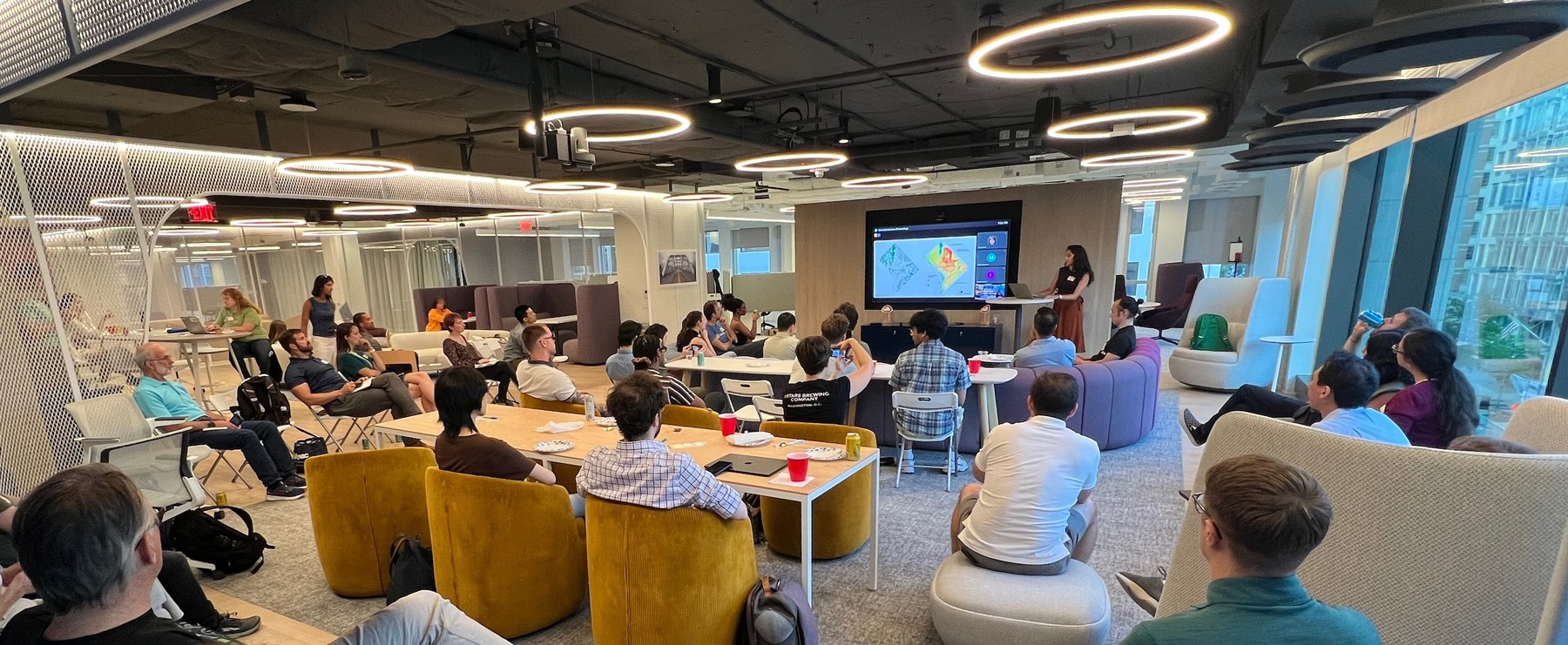
Most communities don’t realize how much they know until they try to write it down.
Civic Tech DC has been organizing technologists, designers, policy thinkers, and curious newcomers in the DMV area since 2012, first as Code for DC, a local brigade affiliated with Code for America, and since 2023 under its current name after the national brigade program dissolved. Over that decade, the organization has quietly accumulated institutional knowledge about both the successes and challenges of sustaining volunteer-driven technology communities.
That knowledge has mostly lived in people’s heads, passed informally from organizer to newcomer. In a volunteer community, that loose structure works because people want to learn from others face-to-face, not read documentation. But it has its limits, and lately I’ve been running into them directly, from basic logistical questions (where to find parking) to more significant ones, like understanding the history behind a partner relationship. And as the community grows, people are starting to ask us for that information too.
Prompted by all of this, I am building an openly maintained, community-editable playbook to give that knowledge a place where we can put it and will grow with us.
Two types of people show up
One thing I’ve been noticing in conversations with folks is that people who come to Civic Tech DC tend to fall into two broad groups. There are those who are looking for community and prefer the structure of an established project team with a defined problem to work on (contributors). Then there are those who are more self-directed and want to use Civic Tech DC as a space to pursue their own ideas, whether that’s starting a new project, organizing an event, or exploring something new (initiators).
This distinction will shape the playbook’s framework, with resources for both groups. Of course, people aren’t necessarily one or the other. Many, especially those who are still finding their footing within the group, start as contributors on a project and over time develop their own ideas and interests they want to pursue. But it means the playbook should have different pathways of getting involved.
Good ideas need more than enthusiasm
Another thing I’ve been noticing is what these initiators need to succeed. It’s easy to think of an idea and, with AI, its even easier to design and deploy an app in minutes. Yet most people unintentionally overlook the essential design thinking process of figuring out who the user actually is and whether the solution will hold up in practice. Without testing the idea and finding a partner who will actually use what gets built, it’s hard to turn an idea into something that lasts.
Civic Tech DC has always had an “incubator model” to help ideas turn into projects, but it has been informal and loosely structured. For an organization whose motto is “structure where it’s needed,” the incubator stage is perhaps where that structure is needed most. By defining a clearer path from pitch to launch, the playbook aims to make it easier for initiators to go from “I have an idea” to “I have a plan with milestones to make it happen.”
The playbook is still in development, but it will represent one of the outcomes of my independent research into what sustains volunteer-driven open technology communities. I also hope the playbook becomes more than a collection of resources. By documenting what we’ve learned, we can make that knowledge more accessible to current and future members.
Excited to share its release soon. Update: See A Playbook for the Community.